
Anna Paulina Luna Meets Russian MPs: US-Russia Relations 2026
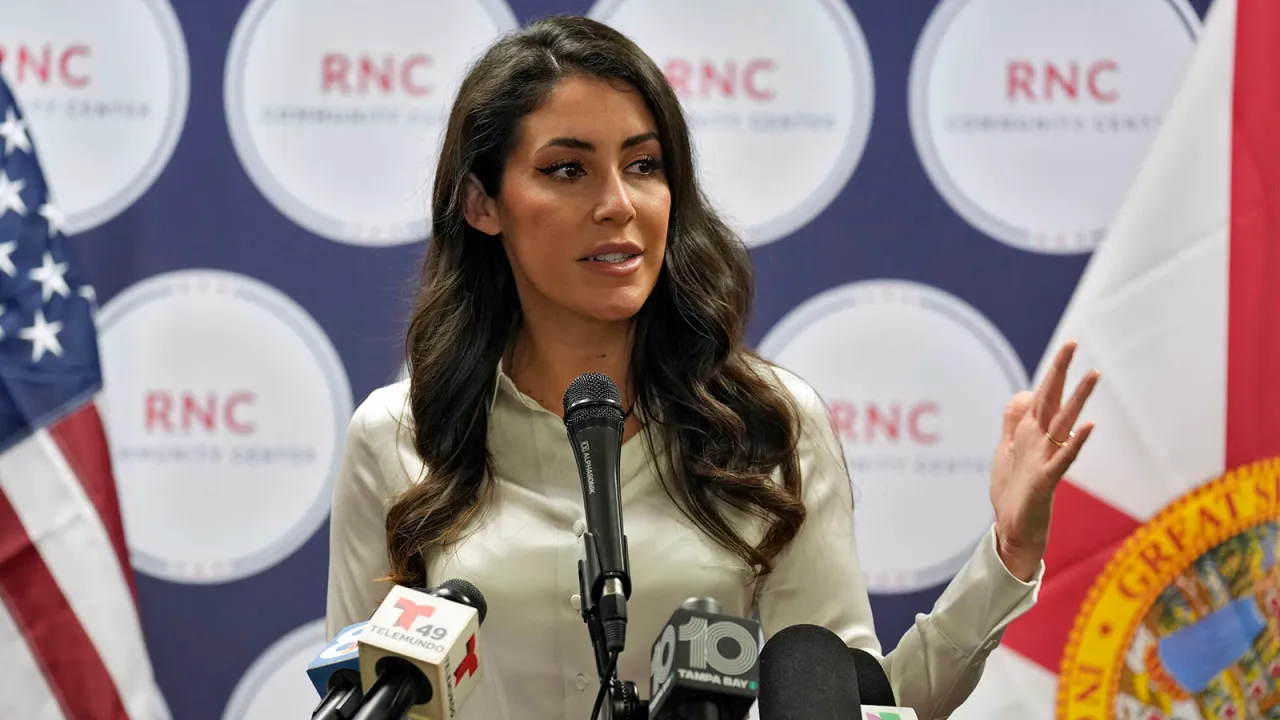
Anna Paulina Luna, a Republican congresswoman from Florida, made headlines in March 2026 when she organized a historic meeting between U.S. lawmakers and Russian State Duma members the first such engagement in nearly 25 years. The event triggered a firestorm of political debate, raising serious questions about diplomacy, sanctions, and America’s role in the ongoing Russian federation Ukraine conflict.
Who Is Anna Paulina Luna and Why Did She Meet Russian Delegates?
Anna Paulina Luna is the U.S. Representative for Florida’s 13th congressional district, first elected in 2022. Known for her bold and often controversial political stances, rep Luna has consistently advocated for reduced U.S. military involvement in Ukraine and pushed for direct engagement with Moscow.
Before entering politics, anna Paulina Luna model work and media presence helped build her public profile. Born to a Mexican-American father and a mother of mixed heritage, Luna became one of the most recognizable faces of the new-generation GOP. Her political career has been marked by strong alignment with Donald Trump’s “America First” agenda.
On March 26, 2026, anna Paulina Luna organized a bipartisan delegation of five U.S. House members to meet with five members of Russia’s State Duma representatives of the united Russia aligned parliament. The meeting took place at the U.S. Institute of Peace and the Russian Ambassador’s residence in Washington, D.C. Luna described the gathering as a step toward restoring open lines of communication between the world’s two largest nuclear superpowers.
Representative Luna stated clearly: her goal was peace, trade dialogue, and bilateral relations not political endorsement of Russia’s actions in Ukraine.
Background: Why US-Russia Diplomatic Talks Matter in 2026
To understand why this meeting matters, one must look at the broader geopolitical context. The Russian federation Ukraine war, which began in February 2022, has dragged into its fourth year with no clear resolution in sight. U.S.-Russia diplomatic relations have been largely frozen, with direct congressional contact virtually nonexistent.
Healthcare in Russia, the economy, and civil society have all been impacted by years of Western sanctions. The Russian federation president list has seen Vladimir Putin consolidate power, and the KGB Putin era of intelligence-driven governance continues to shape Moscow’s foreign policy decisions.
Meanwhile, the Trump administration has signaled a shift toward diplomatic engagement rather than military escalation a position that Luna has actively championed in Congress. With peace talks stalled and the war grinding on, some lawmakers argue that direct dialogue even with controversial figures is necessary to break the deadlock.
The FLA inter political community remains divided, but Luna represents a growing faction within the GOP that believes confrontation alone will not resolve the Russia meme cycle of media-driven hostility and counter-hostility.
What Was the ‘Foster Dialogue’ Goal Behind This Meeting?
Anna Paulina Luna framed the entire initiative around a simple but powerful idea: that open dialogue between nuclear superpowers is not optional it is a moral obligation.
In her public statement on X (formerly Twitter), she wrote that the meeting was meant to “foster dialogue and push for peace” in alignment with the Trump administration’s broader diplomatic push. Luna emphasized that the U.S. and Russia do not need to be permanent enemies, and that allies in trade benefit everyone.
Rep Luna had reportedly received approval from the State Department in January 2026 to arrange the congressional-Duma exchange. The Russian side was led by Vyacheslav Nikonov, chair of the Foreign Affairs Committee in the Duma a senior figure whose participation, according to the Free Russia Foundation, suggested formal Kremlin authorization for the talks.
The Luna initiative also included a Capitol tour, a visit to the Kennedy Center (renamed after Trump), and symbolic gift exchanges including Trump campaign socks and Apollo-Soyuz mission postcards. These symbolic gestures were meant to acknowledge shared history while opening the door to future diplomacy.
Dominick Rubio and other administration-aligned figures have echoed this sentiment, with Secretary Rubio’s foreign policy approach leaning toward deal-making over prolonged conflict.
Mixed GOP Reactions: Why Republicans Are Divided Over Luna’s Decision?
The GOP Putin question has long been a fault line within the Republican Party, and Luna’s meeting cracked it wide open. Reactions from her own colleagues ranged from cautious concern to outright condemnation.
Rep. Andy Barr (R-KY), Luna’s colleague on the House Foreign Affairs Committee, acknowledged the tension directly noting that the administration was still supporting Ukrainian resistance to Russian aggression. He questioned what the meeting’s actual objectives were, given America’s ongoing military and financial commitments to Kyiv.
Others were more supportive. Rep. Derrick Van Orden (R-WI), one of the five U.S. lawmakers present, participated in the meeting alongside Rep. Eli Crane (R-AZ), Rep. Andy Ogles (R-TN), and one Democrat, Rep. Vicente Gonzalez (D-TX). Van Orden later noted somewhat casually that he believed one of the Russian invitees may have been a former KGB Putin-era operative, but described him as “pleasant enough.”
This mixed response reveals a deeper ideological fault line. Ideologues meaning different things to different Republicans: for some, engaging Russia is pragmatic peace-building; for others, it is a dangerous legitimization of an adversary responsible for war crimes.
When did the party switch happen on Russia? Political analysts point to Trump’s 2016 campaign as the turning point, when skepticism of NATO and openness toward Moscow became mainstream within certain GOP circles. Ana Paulina Luna represents the most visible current expression of this trend.
Who Expressed Outrage and Why? Republican Opposition Explained
Not everyone was measured in their response. The backlash came from both sides of the aisle, and some comparisons were extraordinarily harsh.
Rep. Joe Wilson (R-SC), a member of the House Foreign Affairs Committee, compared the meeting to hosting representatives of the Third Reich on Capitol Hill. “Members of the war criminal Putin regime must not be welcomed in any way,” he said in a stark public statement.
Former Republican congressman Adam Kinzinger, a prominent Ukraine supporter, called the U.S. lawmakers who participated “traitors” in a post on X a word that underscores just how deeply this meeting cut into questions of loyalty and patriotism.
From the Democratic side, DCCC spokesperson Madison Andrus demanded that anna Paulina Luna choose between representing Florida or “the Kremlin.” The statement was pointed: if being a Russian sympathizer is Luna’s calling, Florida voters would send her to an early retirement.
Ukraine’s Ambassador to the U.S., Olga Stefanishyna the Ukraine ambassador to us made clear that the Russian lawmakers present were under active U.S. sanctions and were, in her words, “directly responsible for massive war crimes.” The Razom for Ukraine advocacy group called the meeting “outrageous and unacceptable.”
To mixed reactions is an understatement this was a politically explosive moment that exposed Washington’s deepest divisions over how to handle Russia in 2026.
Why Were These Russian Lawmakers Sanctioned and Does It Matter?
This is where the debate becomes legally and morally complex. The Russian delegation included individuals under active U.S. sanctions meaning the U.S. government has officially designated them as posing threats to national security or human rights.
The delegation included Boris Chernyshov of the Liberal Democratic Party, Deputy Chair of the State Duma Mikhail Delyagin of a Just Russia For Truth, and Vladimir Isakov of the Communist Party. These are members of Russia’s so-called “systemic opposition” parties that exist within the Kremlin’s political framework but ultimately bow to its authority. Luna fox critics have used this fact to argue that Luna was not engaging with genuine Russian dissent, but with Kremlin-approved proxies.
What does equate mean in this context? Critics argue the meeting equated to U.S. recognition of sanctioned individuals as legitimate diplomatic partners a symbolic victory for Moscow regardless of what was said. The equated nature of the exchange treating war-tied figures as peace partners is what many find most troubling.
Does it matter legally? Luna’s team argued the State Department had given prior approval. But opponents say congressional approval is a separate matter, and that hosting sanctioned officials on Capitol soil sets a dangerous precedent.
Ukraine War Impact: How This Meeting Affects the Ongoing Conflict in 2026
The Russian federation Ukraine war enters 2026 with U.S.-mediated peace talks in a de facto freeze. The Trump administration has signaled reduced appetite for indefinite military support to Kyiv, and anna Paulina Luna is a cosponsor of the Ukraine Fatigue Resolution a bill that would suspend all U.S. foreign aid to Ukraine and demand an immediate ceasefire.
The timing of this congressional-Duma meeting is therefore not coincidental. Kremlin spokesperson Dmitry Peskov confirmed that Putin had set “basic directives” for the Russian delegation’s trip and would be “carefully briefed” on the outcomes a clear signal that Moscow views this as a strategic diplomatic opening, not just a courtesy visit.
News for Russian state media framed the meeting triumphantly as proof that the West is warming to dialogue on Russia’s terms. Kirill Dmitriev, Putin’s special envoy, called the meeting “historic” on X. The international crane foundation and other civil society organizations working on conflict resolution have long argued that track-two diplomacy can open pathways that official channels cannot but the question is whether this meeting serves peace or Kremlin propaganda.
For Ukraine, the symbolism is devastating. Every signal from Washington that reduces pressure on Moscow strengthens Russia’s negotiating hand and weakens Ukraine’s.
Expert Opinions: Is Dialogue with Russia the Right Move in 2026?
The hill news and other major outlets have sought expert commentary on whether Luna’s initiative represents bold diplomacy or dangerous naivety.
Supporters of engagement argue that the U.S. and Russia have historically maintained back-channel communications even during the tensest Cold War moments, and that cutting off all dialogue increases the risk of miscalculation. The Free Russia Foundation noted that the composition of the Russian delegation led by a senior Foreign Affairs Committee chair suggests Moscow is genuinely interested in exploring whether U.S. congressional opinion is shifting.
Critics, however, point out that Luna bars of diplomatic acceptability exist for a reason. Engaging with sanctioned officials who are tied to war crimes does not advance peace it legitimizes aggression. Wand Luna supporters in the progressive sphere argue that Luna is not a neutral peacemaker but an ideologically motivated actor who has consistently sided with Russia over Ukraine.
Luna name meaning in Latin is “moon” a symbol of reflection. But in Washington’s current political climate, reflection has given way to reaction. Whether this meeting ultimately reflects wise statecraft or reckless appeasement remains deeply contested.
What Happens Next? Possible Outcomes of This Diplomatic Move
The Russia-U.S. congressional dialogue opened by anna Paulina Luna could evolve in several directions:
Russia’s Ambassador Alexander Darchiev confirmed that talks would continue on March 27, and Russian MP Svetlana Zhurova mentioned discussions around diplomatic property, direct flights, and even the creation of a formal congressional “friendship group” with Russia.
If a friendship group is established, it would represent a formalization of back-channel diplomacy that bypasses the State Department and traditional foreign policy structures. Supporters see this as creative statecraft; opponents see it as a shadow foreign policy that undermines America’s official Ukraine stance.
The Luna initiative also has electoral implications. With Florida’s 13th district watching closely, representative Luna is making a calculated bet that her base supports engagement over escalation. If peace talks accelerate and the Ukraine war ends, she could claim credit. If Russia exploits the opening to stall negotiations, critics will say she was used.
Rep Luna and the GOP Putin wing of the Republican Party are betting that 2026 is the year dialogue replaces confrontation as America’s Russia strategy. Whether that bet pays off will shape U.S. foreign policy for years to come.
Conclusion: Should US Lawmakers Meet Sanctioned Russians?
The question at the heart of this controversy is not really about anna Paulina Luna it is about what kind of nation America wants to be in 2026.
Should U.S. lawmakers meet with sanctioned Russian officials? There is no easy answer. On one hand, diplomacy requires talking to adversaries, not just allies. The most consequential peace agreements in history from Camp David to the Iran nuclear deal involved sitting across the table from people the U.S. officially opposed.
On the other hand, meeting with individuals sanctioned for war crimes carries real symbolic weight. It signals to Moscow and to Kyiv where American priorities lie. The Ukraine ambassador to us and advocacy groups are right to ask: does this meeting serve peace, or does it serve Putin?
What is clear is that anna Paulina Luna has forced a conversation that Washington could no longer avoid. The Russian federation Ukraine war has entered a new political phase in America, one defined less by military aid packages and more by ideological battles over the meaning of peace, sovereignty, and alliance.
Whether you see her as a visionary or a villain depends on which side of that debate you stand. But in 2026, standing on the sidelines is no longer an option.