Burj Khalifa Anniversary: Turns Another Year Above 828 Meters, Seen by Millions Worldwide
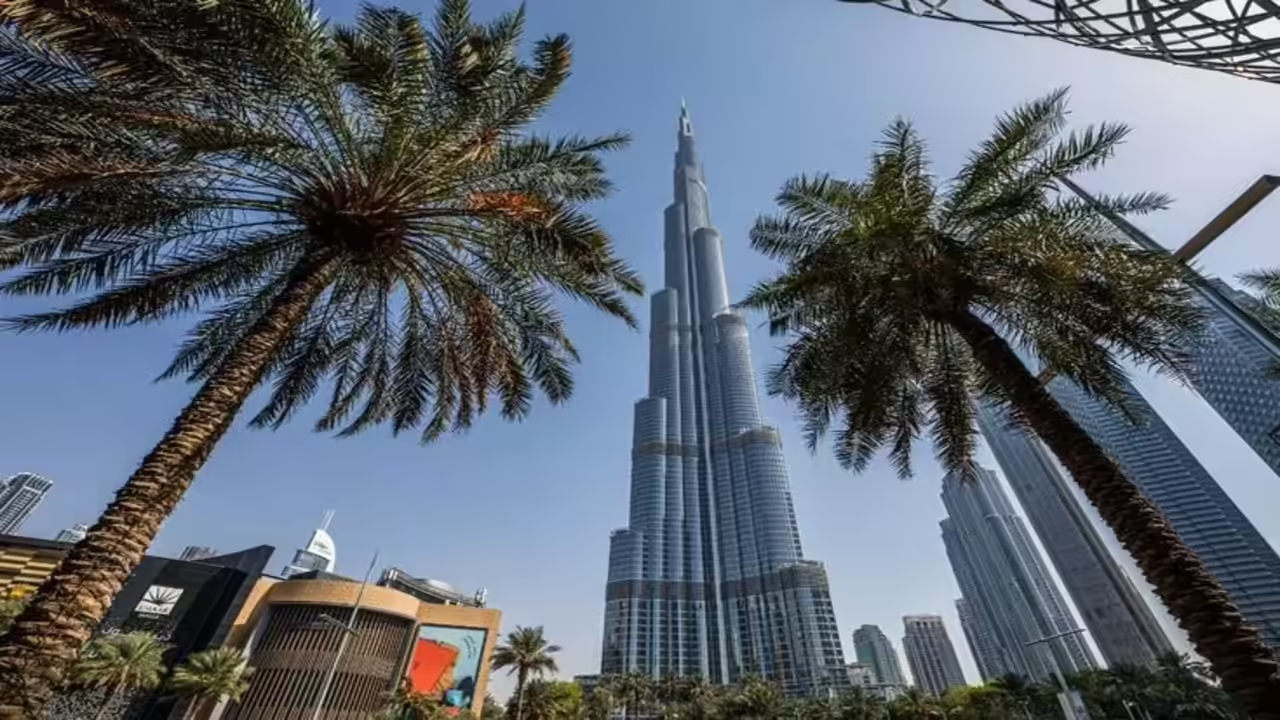
Year after year, Dubai’s skyline whispers its story through the Burj Khalifa’s annual milestone. Rising without pause, 828 meters stretch toward clouds, making it Earth’s loftiest tower. More than height defines it; ingenuity shapes its core, and elegance lines its surface. Where sand blew freely long ago, steel and glass now stand firm. This isn’t just construction; it’s ambition shaped into form. Vision guided every beam upward; resolve held each floor in place. Thinking far ahead carved its silhouette against the sun.
When the building finished in 2010, people started arriving from everywhere. Its shape stands out more than anything else above Dubai’s cityscape. Architects look at it closely. Engineers study how it was built. Investors watch what happens around it. Travelers make time to see it up close. Most who come to the UAE find their way here eventually.
Standing tall where dreams meet steel, this tower meets the Dubai skyline with quiet confidence. High up, ideas shape how people live more than money does. Drawn by something unmistakable, millions arrive here from distant places. Calm moves through the building like rhythm, precise in ways only some will catch. Visitors rise through silence in fast elevators, then step out onto sky decks that hold views like open hands. What you see isn’t just glass and light; it’s proof of choices made years ago, now standing firm against time.
Burj Khalifa Reshaped Modern Skyscraper Design
Towering above Downtown Dubai, the Burj Al Khalifa, once called Burj Al Dubai, cuts a striking figure against the sky. Its record-breaking height and unmistakable shape turned heads worldwide when it opened in 2010.
Ever since, one name always comes up when someone asks about the highest tower anywhere. Standing at 828 meters, nothing else reaches quite that far into the sky. It answers every question about who holds the top spot now. Other buildings try, but none have broken through that mark so far. That number keeps it ahead by a wide margin.
What makes it more than just tall is how it mirrors Dubai’s shift toward bold ideas, high-end living, space that sells, and cutting-edge construction. Sitting in a prime part of town near famous spots, big luxury hotels, and offices reaching skyward, it still means something bigger: drive shaped into steel, smart buildings pushed far, and cities growing smarter one step at a time.
Key Burj Khalifa Facts
- Height: 828 metres Standing tall at two thousand seven hundred seventeen feet Height
- Floors: 163
- Owner: Emaar Properties
- Type: Mixed-use skyscraper
Every year when the date rolls around, searches spike for details about the Burj Khalifa. That’s when queries such as “What height is the Burj Khalifa?” begin appearing more frequently. Floor count questions also rise during this period. At that exact window, data on its peak elevation gains attention fast.
How Tall Is the Burj Khalifa? Height, Floors, and Records
Burj Khalifa Height Explained
Folks keep wondering about it these days. Questions pop up now and then
- Standing at 828 meters, that’s the height of Burj Khalifa
- At 2,717 feet tall, the Burj Khalifa claims the title of world’s tallest structure. Imagine something vanishing into clouds. This tower does just that. Higher than anything else humans have built, it rises without pause. Every single foot plays a role in its unmatched total. The slender spire crowning the roof? That is part of the full measure.
Up top, one level after another, the Burj Khalifa climbs through 163 floors, standing taller than anything built before. Not a single structure reaches higher.
Is the Burj Khalifa Still the Tallest Building?
Yes. Searches like
- Could the Burj Khalifa be holding the title of world’s tallest structure right now?
- Could the Burj Khalifa be Earth’s highest tower?
Yes, that response stays unchanged. Even with what comes next, even alongside new efforts moving forward.
Burj Khalifa Hotel Residences Luxury Living
Burj Khalifa Hotel Stay
A stone’s throw up high, you’ll find the well-known Burj Khalifa hotel, run by Armani, pulling in top-tier guests from every corner of the planet.
Burj Mohammed Bin Rashid Residences
Up high, life gets quieter. At the Burj Mohammed Bin Rashid Residences, eyes meet endless sky, framed by the shape of Burj Khalifa. From here, Downtown Dubai spreads wide, a shifting picture behind glass. Windows open not just to light but to stillness, mornings slow, evenings sharp. Each floor sits above the rush, yet close enough to feel the pulse below. What stands out isn’t size; it’s sight, the way shadows move across towers when the sun dips low.
Burj Khalifa now stands central in high-rise housing markets, shaping choices for top-tier asset growth. Its presence shifts how investors view vertical living spaces.
Burj Khalifa At The Top
Up high, you’ll find a viewing platform called At The Top inside the Burj Khalifa. Dubai sees plenty of visitors come here each year. Though tall and thin against the sky, it pulls crowds just the same. From that height, city lights spread out below like scattered glass. Some arrive early; others arrive near sunset when colors shift across the desert air. Few spots offer such reach into the clouds while staying on solid ground.
- Levels 124 & 125: Public viewing decks
- Level 148: Sky Lounge experience
- These decks offer unmatched views of
- Dubai skyline Burj Khalifa
- Skyline Burj Khalifa
- Nearby towers and landmarks
Folks show up by the million each year, proof enough that this tower grabs eyes worldwide.
Burj Khalifa and Dubai’s Famous Buildings
Standing tall above the city, Burj Khalifa defines Dubai’s skyline. Nearby structures add weight to its dominance among them, a cluster of high-rises along Sheikh Zayed Road. Close by, the Dubai Mall draws crowds without overshadowing the tower’s reach. To the west, Palm Jumeirah stretches into the sea like a silent companion. Each shape around it plays a role in framing the giant. Not every building competes; some simply hold space.
- The Metropolis Tower
- Business Tower
- World Tower
- Lily Tower
- Al Khalifa Building
- Emaar Business Park Building 3
- Landmark Premier Hotel
- Grand Emirates Market
Side by side, these structures shape a horizon people link to today’s Dubai.
Burj Khalifa Compared to World Towers
The Eiffel Tower compared to Burj Khalifa shows Dubai’s tall buildings
- Eiffel Tower: 330 m
- Burj Khalifa: 828 m
Second Tallest Building in the World?
Burj Khalifa still the tallest, but discussions persist
- Merdeka 118
- Shanghai Tower
Still, every attempt falls short of Dubai’s landmark.
Jeddah Tower: The Future Tallest Building?
One thousand meters, that’s how high the Jeddah Tower will climb when done, breaking every current mark. Rising above everything before it, this Saudi skyscraper takes shape as more than just ambition made real. Not far behind comes its claim: taller than Burj Khalifa, the highest of them all. When finished, it won’t just stand; it’ll define what towers can be.
Standing tall in Jeddah Economic City: This development mirrors Saudi Arabia’s drive to stand out in tourism, commerce, and bold design. At its heart, the Jeddah Tower includes high-end homes alongside workspaces, guest accommodations, and lookout areas topped by the planet’s most elevated viewing spot with sweeping sights stretching over the Red Sea and urban landscape below. Even with setbacks, work moving again draws eyes worldwide. When finished, Jeddah Tower will stretch what’s possible in design, taking the crown from Dubai and lifting Saudi Arabia into record books. Tall dreams take shape here. Even now, plenty of folks keep looking up:
- Jeddah Tower progress
- Raffles Jeddah
- Saudi mega-projects
Burj Khalifa remains on top, even so.
Art And Design Shaping Culture Around Burj Khalifa
Starting at the base, shapes echo traditions rooted in local heritage, branching into forms seen across Islamic art. Geometry pulled from nature guides much of the outline, especially blooms tied to ideas like grace under change. Lines climb upward, mirroring the spider lily’s quiet symbolism balance found through motion. Instead of straight edges, angles twist gently, forming a Y that holds firm against wind and weight. Light slips easily between wings, spilling inward where glass meets sky. Views stretch wide from each arm, unblocked by cluttered framing. Stability hides within curves meant to please the eye just as much as to hold tall bones together.
Art shapes the look of Burj Khalifa, showing up in its thoughtfully designed interiors, detailed decor, and, most strikingly, its iconic light displays. When holidays arrive or big moments happen worldwide, the building becomes a giant screen glowing with motion and color. Patterns inside flow across surfaces, made rich by high-end textures and craftsmanship tied to local roots. Even though everything feels sleek and current, echoes of tradition remain woven throughout each space.
Floating above the cityscape, this tower carries echoes of heritage blended with bold new ideas. Its height tells only part of the story; interwoven through its design are rhythms of culture that pulse beneath steel and glass. Not merely an achievement in scale, it stands as a marker of place and time. Shaped by vision yet rooted in history, it reflects how past and future can occupy the same space. What rises here is not just structure but meaning built tall.
FAQs: Burj Khalifa at a Glance
What Is the Tallest Building in the World?
The Burj Khalifa in Dubai is the tallest building in the world.
How Many Floors Are in the Burj Khalifa?
The Burj Khalifa has 163 floors.
How Tall Is the Burj Khalifa in Meters?
It is 828 meters tall.
Will Jeddah Tower Be Taller Than Burj Khalifa?
Yes, once completed, Jeddah Tower is expected to surpass it.
What Makes Burj Khalifa Special?
Its height, design, luxury residences, hotel, and global cultural impact.
Final Thoughts
When people mark the Burj Khalifa’s anniversary, it still stands like a quiet promise of what Dubai once imagined. Because of how tall it reaches, far beyond others, its effect spreads through property trends, travelers’ paths, and city designs worldwide. Though built of steel and glass, it has become something deeper, a story that keeps unfolding long after construction ended.
When new skyscrapers climb higher, memory keeps Burj Khalifa alive not just as stone and steel but as a moment when limits were bent. Its shape lingers where doubt once stood.